The decisions that matter in the first two hours are all made indoors, and the roof comes second. Once water is through the deck it is a building problem: power, then containment, then the ceiling, then the photographs. Everything on this page is doable tonight with a torch, a bucket and a phone.
Water travels, so the stain lies to you
Water coming through a roof does not fall straight down. It lands on the underside of the deck, runs along the slope of the decking until it meets a rafter, runs along the rafter until it meets something that stops it, and only then drops. On a house with a finished attic, or with ducting or a ceiling plane in the way, it can travel a long way sideways before it appears.
So the wet patch on the bedroom ceiling is genuine information about where the water came out, and almost no information about where it came in. This is the single most common reason people chase a leak into the wrong part of the roof, and it is why an attic inspection with a torch is worth more than a ladder against the eave.
The bulge, and why you should puncture it
A drywall ceiling holding water sags into a dome. The instinct is to leave it alone. The instinct is wrong.
A bulging ceiling is a bag of water hanging from paper, and when it fails it fails all at once, usually across a much larger area than the bulge, and usually onto whatever is underneath. The safer move is to release it deliberately, on your terms.
- Move everything out from under it, then put down a bucket and something to catch splash.
- Establish that there is no light fitting, no ceiling fan and no junction box anywhere in that area of ceiling. If there is, go to the warning below first.
- Stand to one side, not underneath, and make a single small hole at the lowest point of the bulge with a screwdriver on the end of a stick or a pole. The lowest point matters: a hole above the water line achieves nothing.
- Let it drain fully. If the flow does not stop, make a second hole rather than enlarging the first.
A neat hole in a ceiling that has to be repaired anyway is a much better outcome than a sheet of wet drywall on a sofa.
Water and a ceiling light are a reason to switch the circuit off
If water is running near or through a light fitting, a ceiling fan, a smoke alarm or any junction box, treat the whole area as energised, kill that circuit at the panel before anybody goes near it, and if you cannot identify the circuit with confidence, kill the main. Do not stand on a wet floor to reach a switch. Wet insulation touching a connection inside a fixture is a fire and shock risk that persists long after the dripping stops, and it is a reason to have an electrician look at that fixture before it is used again rather than assuming it dried out.
Insulation is the part everyone forgets
Loose fill and batt insulation both absorb an enormous amount of water and hold it against the ceiling plane. Three things follow. It stops insulating, so the room is cold and the bills change. It is heavy, and a saturated patch of blown in insulation is a load the ceiling was never designed to carry. And it keeps everything around it damp for far longer than the roof leak lasted, which is what turns a two hour event into a three week problem.
Wet insulation generally has to come out rather than being dried in place. That is restoration work rather than roofing, and it is a different trade with different equipment.
The drying clock
The rule of thumb the restoration trades work to is that wet organic material, which in a house means drywall, timber, paper facing and insulation, begins to support mould growth in roughly a day or two at ordinary indoor temperatures. That is a rule of thumb rather than a law of physics, and it depends on temperature, on how wet things got, and on airflow. It is still the right timescale to plan against.
Practically: get air moving, open the space up, run fans and a dehumidifier if you have them, and do not close a wet cavity back up because it looks tidy. A ceiling that was patched over damp framing looks fine for about eight months.
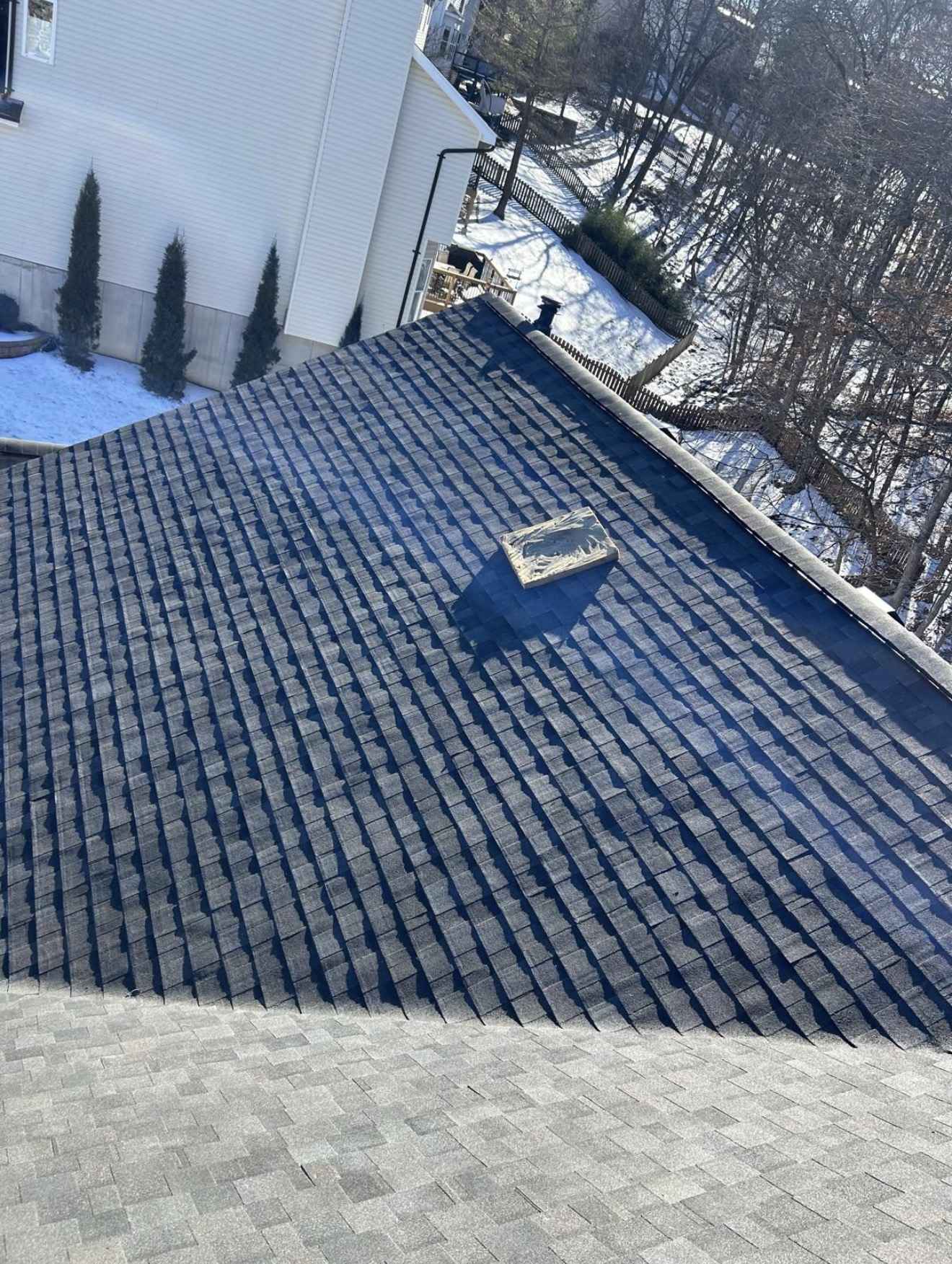
Where the roofer's job starts and stops
A roofing contractor stops the water and repairs the roof. Everything on the inside of the ceiling plane belongs to other trades: restoration for drying and removal, a drywall finisher for the ceiling, an electrician for anything that got wet and carries current, and sometimes a plumber, because a storm week is also when people discover that the thing dripping in the bathroom was never the roof.
Keys does roofing, gutters and downspouts. It will tell you what it thinks the water came through and it will not pretend the interior is in its lane.
Document the inside as carefully as the outside
People photograph the roof and forget the ceiling. The interior record is often the better one, because it is easy to take, it is timestamped, and it shows an effect rather than an inference. Photograph the active drip, the stain as it spreads over the following days, the wet insulation in the attic, the contents that got wet, and the fans and dehumidifiers running. Keep the receipts for anything you buy to deal with it.
What no roofing company in this state can then do is take that file to your insurer and argue it, because Missouri law at RSMo 407.725 bars a roofing contractor from representing or negotiating a property owner on an insurance claim. What a contractor can do is write down precisely what it saw and hand you the file.