A tarp is the least glamorous thing a roofing company does and the one that decides whether you are drying out a ceiling or replacing it. It is also the item most often misunderstood by the person paying for it, usually in one specific way: people think of it as a repair that happens to be blue. It is not a repair. It is a clock you buy, and the rest of this page is how long that clock actually runs.
What a tarp is for
A tarp has exactly one job. It keeps water out of an opening until the permanent repair can be done properly. It does not restore the roof, it does not dry anything that is already wet, and it does not stop deterioration that has already started in a soaked deck. What it does is stop the problem compounding, which after a wind event is usually the whole battle, because the second and third fronts behind the first one do more damage to an open roof than the storm that opened it.
The timing question is therefore not how bad the damage looks. It is what the sky is doing on Thursday.
How one is actually fastened
This is the part that surprises people. A tarp that will survive a night of wind is not thrown over the ridge and weighted with bricks. Weighted tarps are how a roof loses more shingles: wind gets under a loose edge, the tarp becomes a sail, and it leaves with a strip of roof attached.
A properly installed emergency tarp is mechanically fastened. The usual method is to roll the edge of the tarp around a length of timber batten, then screw or nail through the timber into the roof deck, so the fastener passes through wood and the tarp is clamped rather than pierced at a single point. The battens run along the edges, the tarp is carried over the ridge and fastened down the far slope so that water cannot run in over the top, and the whole thing is drawn tight enough that it cannot flap. Flapping is what destroys a tarp: a sheet of poly that beats against a roof for two nights will be in ribbons by the third.
Yes, that puts new holes in your roof
It does, deliberately, and anybody who tells you otherwise is either not fastening it properly or not telling you the truth. The fasteners go through the tarp assembly and into the deck, and they leave holes that have to be dealt with at the permanent repair. That is an accepted trade off, because a handful of screw holes under a sealed tarp does far less harm than a sheet that lifts at two in the morning. It is also a reason to put the battens where the permanent work will cover them wherever the layout allows.
How long it lasts, honestly
Weeks, not months. Ordinary polyethylene sheeting degrades under ultraviolet light, and a St. Louis summer is unkind to it. A well fastened tarp on a simple slope will hold up for a reasonable stretch; the same tarp on a complicated roof, with valleys and penetrations and changes of plane, is working much harder and will not.
If a tarp is going to be on a house for a long stretch, it needs looking at after every significant wind, and it will probably need refastening at least once. A tarp nobody has checked since March is not protection, it is a decoration that has stopped working and is now holding water against the deck.
When tarping is the wrong answer
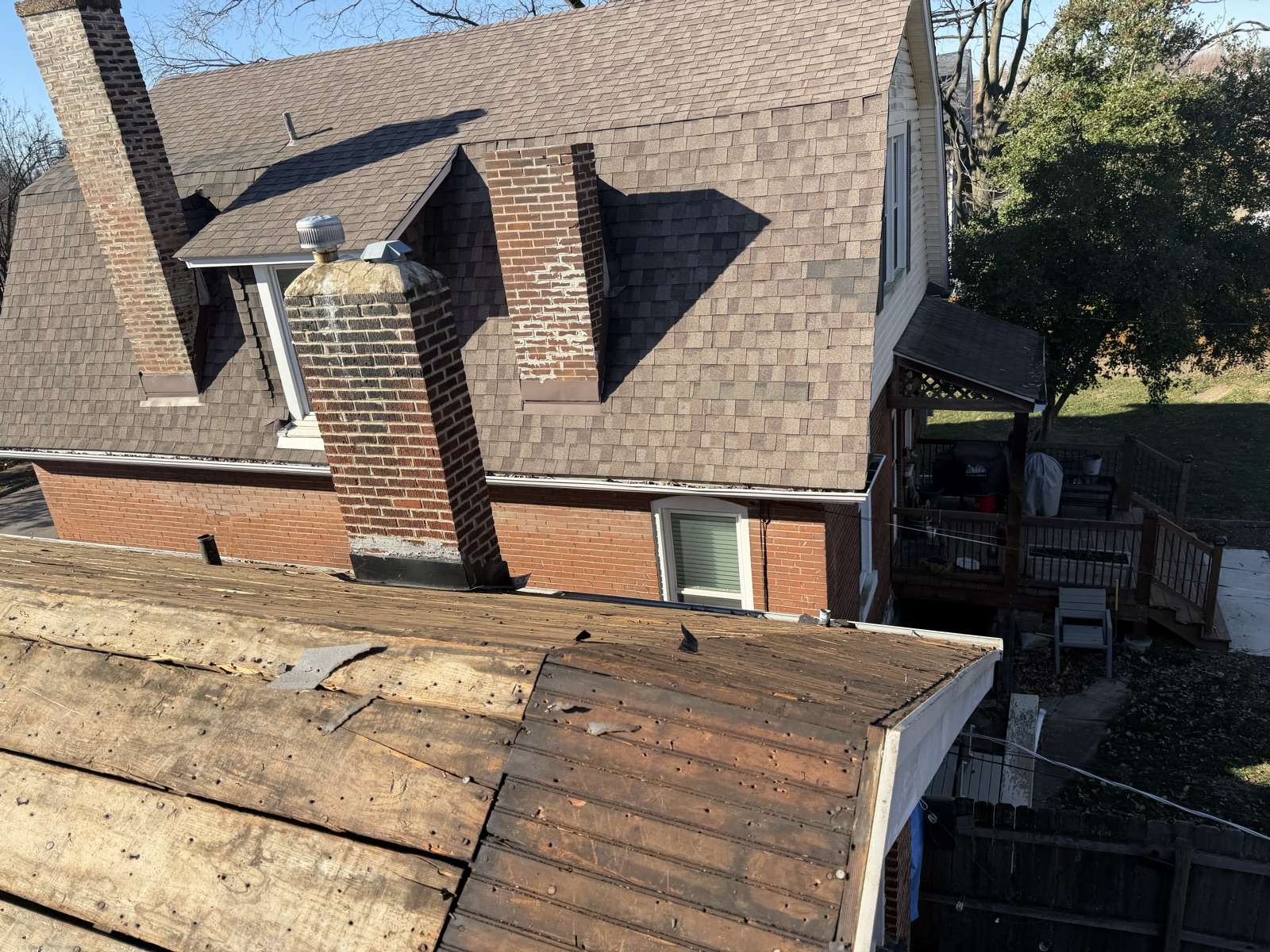
- The structure itself is compromised. If framing is broken, if a rafter has cracked, or if the deck is spongy over a wide area, sending somebody up to walk on it to fasten a tarp is asking a person to stand on the part that is failing. That situation needs an assessment, not a sheet of poly.
- A tree is still on the roof. The limb is doing two things: holding water in and holding structure together. Removing it can open the roof much further, so the tree work and the temporary protection want to be sequenced together rather than a tarp being thrown over the top of a trunk. That sequence is here.
- The permanent repair is genuinely imminent. If the crew is on the roof tomorrow morning and the forecast is dry, a tarp is a cost and a set of holes for no benefit. Ask, rather than assuming, and ask before the truck arrives.
- The roof is not actually open. Missing tabs on a field of shingles with the underlayment intact is a repair, and it may not be an emergency at all. Lifted shingles look alarming and frequently are not letting water in. This is worth having somebody establish rather than guessing at from the drive.
What to ask before anybody puts one on
- Is the roof actually open, and where? Ask for a photograph of the opening, not a description of it.
- How will it be fastened, and where will the fasteners land? A crew that has thought about this will have an answer involving battens and the ridge.
- Is this billed work, and how? Temporary protection is a line of work like any other and it is entirely reasonable for it to be charged. What is not reasonable is finding that out afterwards. Get the number before the ladder goes up.
- What is the plan and the rough timeline for the permanent repair, and who is doing it?
Straight
Keys does temporary protection as part of storm work and will tell you on the phone today whether you need it. After a regional event there are days when every roofing company in this metro is booked solid, and you will get a queue position with a date on it rather than a promise. That is worth more than the alternative: a company claiming it can be at your house within the hour on the morning after a metro wide wind event is telling you something about its capacity, its truthfulness, or both.
Keeping the receipts
Most homeowners policies carry a condition requiring the insured to take reasonable steps to protect the property from further damage after a loss. Read your own wording, because they differ. In practice this is why people keep receipts for tarps, for the timber, for a plumber's visit, for the fans that dried the ceiling: those costs are typically part of the same event rather than a separate purchase. Photograph the tarp once it is on, and keep the paperwork with the storm date written on it.
What nobody in a roofing truck can do for you is take that paperwork to your insurer, because Missouri law at RSMo 407.725 bars a roofing contractor from representing or negotiating a property owner on any insurance claim. The filing and the conversation are yours. What Keys can do is write down, in detail, what it saw.